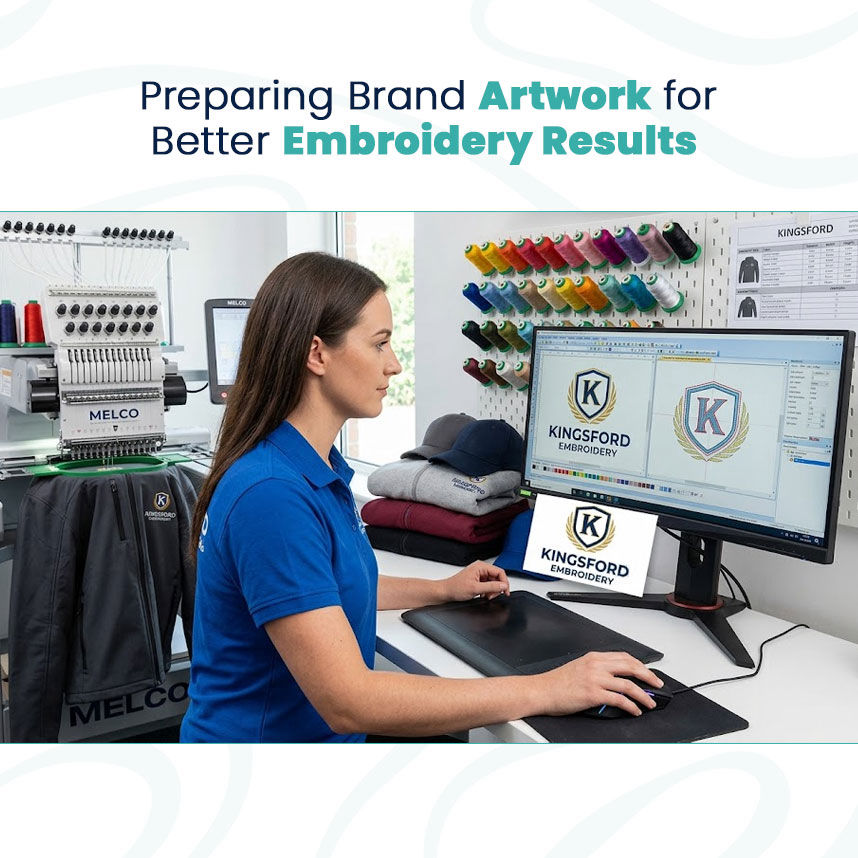
A strong apparel design starts long before the needle begins moving. When a brand logo is being prepared for shirts, jackets, hats, or uniforms, the original artwork needs to be checked carefully before it becomes an embroidery file.
If you plan to Convert JPG to PES, preparing the artwork first can help avoid problems later. This is also where custom embroidery digitizing becomes important because the artwork has to be turned into practical stitches, not just placed into a different file format.
A JPG may contain background marks, rough edges, compression artifacts, or details that are not useful for embroidery.
Before conversion, review the artwork and remove anything that does not need to be stitched.
Pay special attention to:
Tiny lettering
Thin lines
Small gaps
Shadows
Gradients
Complex backgrounds
Simple artwork gives the digitizer a better starting point.
The same logo may be used on different apparel. A design that works well on a large jacket back may need changes for a small left-chest placement.
Consider the intended:
Garment type
Embroidery location
Finished dimensions
Fabric weight
Stabilizer
Thread colors
These details can influence how the artwork should be digitized.
If the original JPG is blurry or too small, recreating the artwork as clean vector shapes can make the preparation process easier. Clear shapes give the digitizer better information when building embroidery objects.
However, even clean vector artwork still needs to be converted into actual stitches. Vector graphics are not embroidery files by themselves.
Professional artwork preparation is not about keeping every detail from the original image. It is about deciding what will look good when reproduced with thread.
Some details may need to be enlarged, simplified, or removed. Stitch types may also need to change based on the shape and size.
When businesses prepare artwork with the final embroidery conditions in mind, they can reduce unnecessary revisions and improve consistency across apparel orders.
A clean starting file, suitable sizing, and careful stitch planning all contribute to a more reliable embroidery result.
@jamesadam
